CULTURE
In the land of fairy chimneys and cave houses, the Anatolians charm you with tales of their ancient culture and spirit.
I set foot on Cappadocia after spending a week in Istanbul. I had walked the length and breadth of the city. It was spring and I found myself at every park admiring the tulips and daffodils. There were people everywhere. I watched locals milling about on streets, in parks, cafes, bars, shops, bookstores and museums. I soaked in every bit of atmospheric pleasure the city offered.
Lovers, men and women alike, held hands as they talked. Groups of locals danced on the streets. Smoke filled the air. Istiklal Cadessi, one of the busiest streets in the world, filled me with an excitement I wanted to hold on to. And Istanbul represented every idea of romance I could possibly imagine.
So when I arrived in Cappadocia, I felt a deep void.
As we drove from Kaiseri airport toward Goreme, I noticed the endless vista of a barren land. Closer to town, several rocky formations of this world heritage site appeared. After the initial excitement of coming face to face with them was over, I pined for people. For miles and miles, there was not a soul in sight. I remember pulling down the window and saying aloud: “How empty is this town, what of its people?” The thought of being up on a hot air balloon in the Cappadocian sky seemed to be the only silver lining.
To my surprise, however, I discovered the Anatolian warmth and spirit from the very moment I stepped of our car. The locals of Goreme were busy – lugging bags, making notes, cleaning, serving, welcoming their guests and making them feel at home with endless cups of cay (Turkish tea). There were sounds of footsteps, clanking of utensils, scrubbing of tables, roaring of the car engine to pick up supplies. I think I heard the sound of the grain grinding too, or perhaps it was my imagination in the face of continuous display of the Anatolian philosophy: “Life is work”. No one was idle. No one wanted to rest. Anatolia (also known as Asia Minor) was unlike Istanbul, where ‘not doing anything’ is considered criminal.
On our first day, we watched the evening draw in its stillness. The lights came up at the *cave hotels surrounding us. From afar it seemed like droves of glow worms had descended upon the caves and settled onto their little windows. Outside our hotel, the apricot blossoms blew in the wind. A few petals fluttered down upon my face as if to say hello.
The hotel lady parked her car and nodded at us with her warm smile. The tassels of her scarf peeped out from under her jacket and swung as she moved. Her hands were exposed from under her jacket sleeve, the wrinkles visible, making a statement of her hardworking self. The stars appeared like silver crisps. The cups of tea kept coming. I was swept by the nostalgia of a tea culture I left behind in the Northeast of India, where tea is served likewise and draws you closer to the family and friends you have it with.
The next morning we set out for a hike. It was warm. We started on foot at Ugrup and it was only then that I became aware of the magnanimity of the Cappadocian landscape. A hike to the Greek village of Mustafapasa, also known as Sinassos or “City of the Sun”, took us to the famous stone mansions. Some were empty, few preserved as educational institutes and some converted into tourist accommodations. The design of these sprawling houses with well constructed walls, spacious courtyards and stone staircases leading to upper floors, told the story of the wealth and prosperity of the Greeks. They had been living in Cappadocia as early as the Hellenistic* era after the conquest of Anatolia by Alexander the Great.
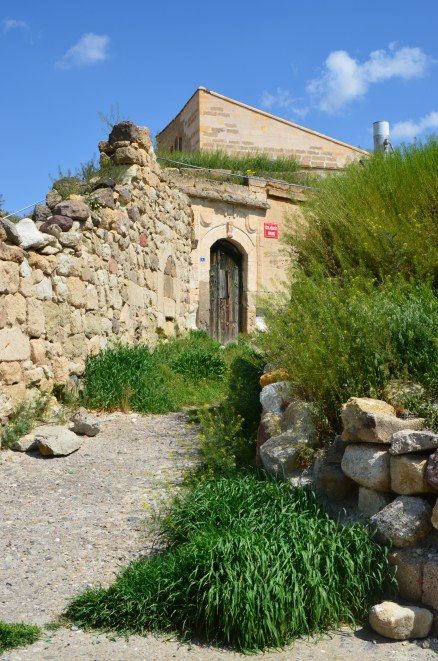
Today, these mansions tell the tale of a flourishing past, abandonment and lost glory of a civilisation. The Cappadocian Greeks left the country when Greece lost to Turkey in the Greco-Turkish war (1919-22). The Treaty of Lausanne, which marked the end of the war recognised Turkish sovereignty over Asia Minor, following which both Greek and Turkish governments engaged in a population exchange in 1923. Very recently, Turkish president Tayyip Erdogan criticised signing of the Treaty of Lausanne on July 24, 1923 as a compromise. “At Lausanne, we gave away the Greek islands that you could shout across to,” he said.
After Mustafapasa, the highlight of our day was the discovery of the Soganly Valley. A hidden treasure, the valley was as green as it could get — a canvas of spring colours. As we went up and down the hill, we found ourselves inside many cave churches (kilise in Turkish), most of which were adorned with frescoes depicting Biblical legends. The Hidden Church was indeed hidden and surprised us with its sudden appearance on the hill.
What I missed in the abandoned Greek kitchens of Mustafapasa became a possibility in a true-to-its-kind Turkish kitchen at Soganly. This time, there was no mistaking the sound of grains in the kitchen backyard. The owner had barely jotted down the order, when the matron of the kitchen had already instructed her staff and prepared to get the flat bread ready. True to tradition, no one else would take her place in baking the bread. To me it seemed, no one else would get it right.

The industrious Anatolians were at work to make their guests feel welcome and fed. Outside, fellow guests plucked figs from the garden as if they were back in time, once again part of a childhood activity they were so fond of. We came away with mementoes – bottles of honey locally produced and packaged in the country kitchen.
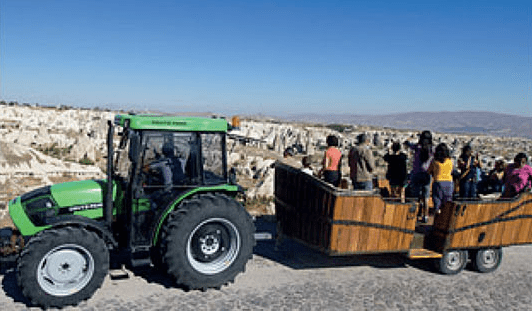
As if to reiterate how the Anatolian Turks lived, the owner of our hotel Yavuz Ali invited us to his 400-year-old family farm in Kings Valley, near Goreme. A secret garden and akin to the Anatolian essence, the farm revealed itself after a fair amount of hard work – a tractor driven wagon ride on a mountainous road followed by a short trek and a climb down hand-carved stone steps.
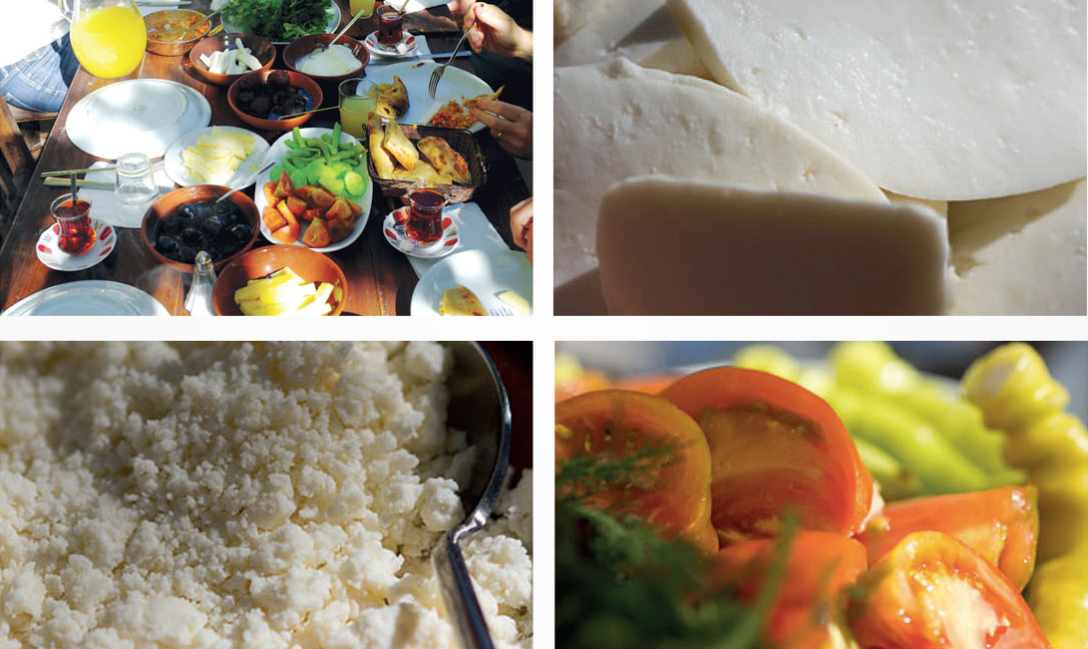
During the walk through the wilderness, Ali talked about himself and how intimately connected he was to his valley. On the way, he handpicked a few herbs, which his staff served us for breakfast. When all his brothers had decided to leave the farm to explore lucrative opportunities, Ali continued to work there. His job included carrying not only the crops but also herding the donkeys up the mountain after sunrise, every day, to aid in the transfer of supplies and then down the stone steps, back to the farm. The rich had horses and donkeys while the poor only had the latter, Ali said, smiling.
The stone steps are symbolic of who Ali is, and what his family believes in, that work is worship. When Cappadocia was discovered by UNESCO in the Eighties, Ali said, his life, like that of many others in his village changed for the better. He had a chance to tell the story of traditional Anatolian village life to people visiting from around the world.
He smiled as he said to me, “When life seemed tough, those steps taught me not to give up. To be patient. I see them as a stepping stone to my success. In life, nothing comes easy. You have to earn it.”

All pictures, barring those with sources mentioned, have been shot by Sharmi Dey.
ADDENDUM
*Hellenistic is derived from Hellas or Hellazein, which refers to Greece, and marks the time between the death of Alexander the Great and the emergence of the Roman Empire. Circa 323 -31 BC.
*Cappadocian caves were dug by early Christians, who hid there after they were kicked out of the Arabian Peninsula. These caves were built in different centuries for different reasons. Some of these caves were used as Pigeon Houses (till about the Sixties) for pigeon droppings to be used as fertilizers in the village farms. While the upper caves were, and still are used for living, the underground caves serve as storage houses for crops.
Copyright of [Sharmi Dey] and [Deyscriptions], 2016. Unauthorized use and/or duplication of this material without express and written permission from this site’s author and/or owner is strictly prohibited. Excerpts and links may be used, provided that full and clear credit is given to [Sharmi Dey] and [Deyscriptions] with appropriate and specific direction to the original content.


Nice one Sharmi….
LikeLike
Thank you so much Phanindra.
LikeLike