NEIGHBOURHOODS
Connecting the past to the present in Kuzguncuk, the other Istanbul.
In Istanbul, there is a certain romance associated with drinking tea. It is not had like a ritual as in Japan, instead it is more of a cultural affair that draws people to gather at tables and exchange stories over tea. Here tea is celebrated everywhere. In the cafes dotting the main streets and back-alleys on the European side. In parks, at bookstores, and art galleries on Istiklal Cadessi. Atop the Galata Tower that offers a panoramic view of the city with the Bosphorous shimmering below. Up on the hill in Eyup, at Pierre Lotti’s erstwhile residence that was transformed into an al fresco café, where you can watch the Aegean sun change colours along the Golden Horn while swirls of mist come up from the groves, and across the sea inside quaint Asian joints and homely cafes.
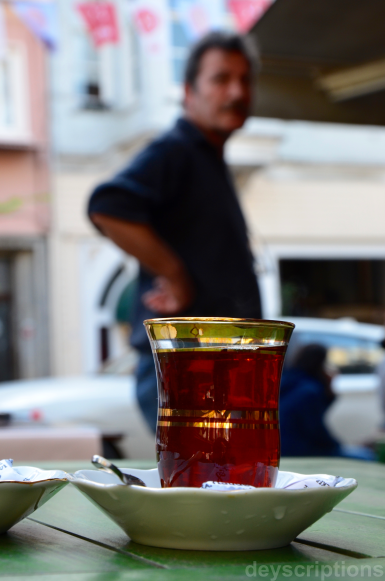 The sea does not move me. Mountains do. At least that’s what I thought till I came face to face with the Bosphorus – a strait that unites the Black Sea and the Sea of Marmara and separates the European side of Turkey from the Asian side. During our Bosphorus cruise, I discovered its various districts and neighbourhoods – Bebek, Beylerbeyi, Ortakoy, Uskudar, Kuzguncuk and Kadikoy. But nothing had quite prepared me for Kuzguncuk, a small neighbourhood on the Asian shore of the Bosphorus, located in the Uskudar district.
One day I boarded a Sehir Hatlari ferryboat that went as far as Uskudar, got off at the pier and boarded a bus toward the hills. A short ride along the Bosphorus would lead me to Kuzguncuk. On my left, through the tall glass windows of the bus, I could see a line of majestic yalis, shimmering in the shifting afternoon light. On our right, we crossed the ruins of what was once a mansion. It looked like it was intended to be left as it was, as an emblem of the city’s bloody past.
I got off the bus at the corner of Icadiye Cadessi in Kuzguncuk. After trotting about Istiklal Cadessi, Istanbul’s most famous street that meets Taksim Square on one end and Beyoglu on another, I was surprised by Icadiye’s appearance. Both streets are a study in contrast. They represent two strikingly different faces of Istanbul. Istiklal is noisy, Icadiye is peaceful. Istiklal is lined with art nouveau buildings, Icadiye leafy and flanked by rainbow-coloured row houses. Istiklal is modern and contemporary, Icadiye traditional, resembling a mahalle, where everybody knows everybody. Istiklal is enmeshed in a mishmash of cultures, Icadiye rooted in its multi-cultural identity. Istiklal is big, a stranger to everyone who walks its street, Icadiye is small, homely and intimate. Off the coastal road teeming with tourists, Icadiye appeared tucked away like a shy girl, waiting to be befriended.
As I walked up the cobblestone path, I watched locals stop to greet one another, while enjoying their afternoon tea and conversations on the sidewalk. In her book, Streets of Memory: Landscape, Tolerance and National Identity in Istanbul, Amy Mills says, a complaint often jocularly recited is that “it takes a resident more than half an hour to walk down the main street Icadiye Cadessi to get to the bus stop or the ferry station because of the time it takes to greet everyone on the way.” The essence of Kuzguncuk has been the ‘neighbourliness’ of its community, the first quality that endeared its nouveau settlers.
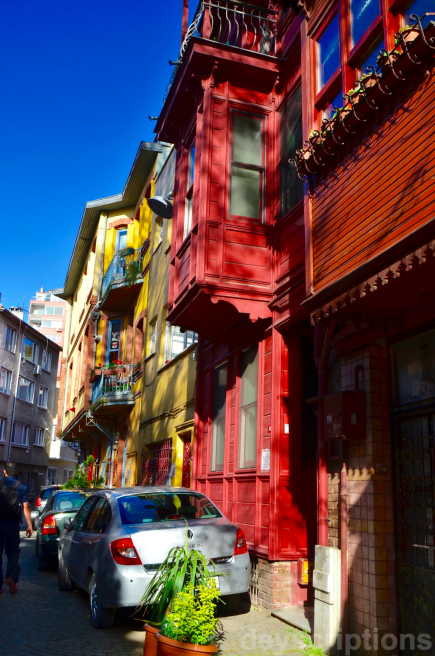
Its other quality is its picturesque streetscape. Wrapped in a swathe of colours, the streets flanked by antique, dessert-coloured row houses with bay windows could very well make an artist’s souvenir of a painting. The stairs on the slopes that connect to these houses have been colour coordinated for the sake of symmetry. It looks like a painter master-planned this suburb. Walking around, I was transported to Notting Hill, where colourful houses open up to a bustling flea market. But in Kuzguncuk it is personal. There is no hustle bustle, no chaos of a marketplace. It is not touristy. It is home.
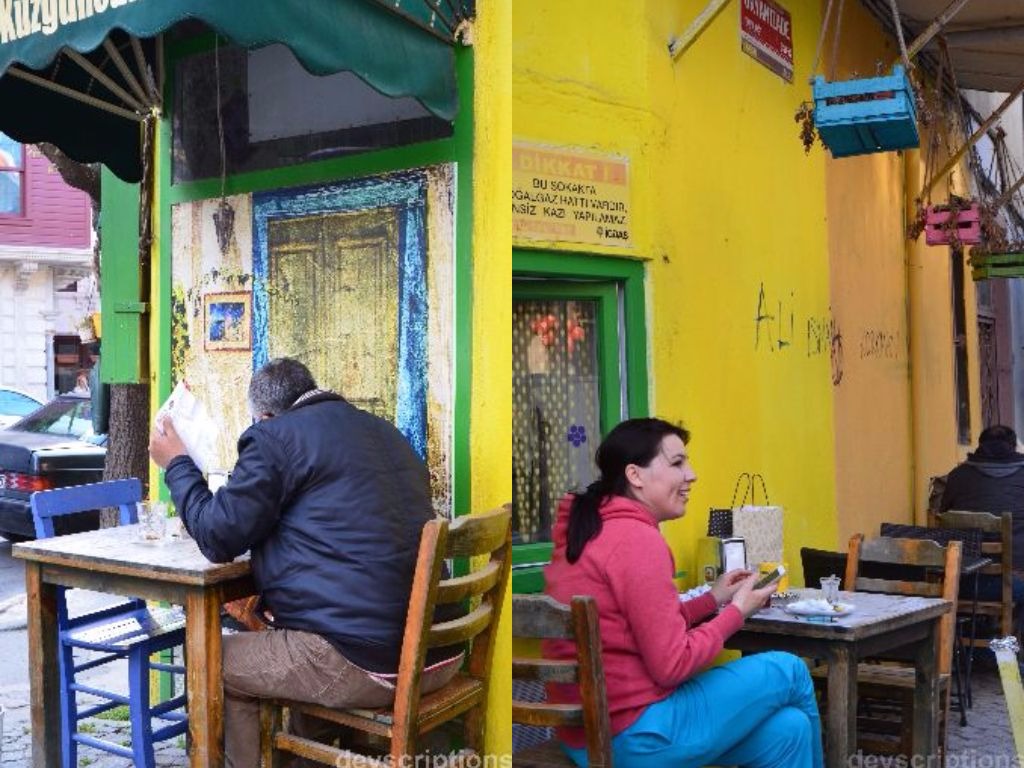
In the spring, cafes and tea houses extend to the sidewalks. Nature is an inspiration for the rapturous ambience of these cafes. Overhead potted plants and spring-summer blooms decorating window sills are part of the decor. Diminutive, multi-coloured furniture open their arms, inviting everyone passing by for a cup of cay.

Much like the Montemarte of yesteryears, today Kuzguncuk is home to artists from far and beyond who fell in love with its tranquility and settled in the area, and made their home in Uryanizade Sokak, a restored street lined with Ottoman houses, workshops and ateliers.
The restored streets recall Istanbul’s historical cosmopolitanism that was first disrupted with Turkey’s anti-minority act – the imposition of Wealth Tax (1942-43) followed by the 1955 riots where minorities of the area were attacked by a Turkish mob, resulting in several deaths. The attack construed to be part of a national movement, a Turkification drive, resulted in the exodus of almost all minority Jews, Greeks and Armenians who had settled here, and has been the subject of many a novel including The Bastard of Istanbul by Elif Shafak. A beacon of multiculturalism, what remained of Kuzguncuk are gentrified remnants of a physical landscape navigated by its multi-ethnic community. The propinquity of its synagogues, Armenian and Greek Orthodox churches and mosques reminds me of Calcutta’s Brabourne Road – a melting pot of cultures, whose thoroughfare is home to more than one church, synagogue and temple that have co-existed in harmony, and which still celebrate the city’s multi-cultural identity.
Kuzguncuk’s history of tolerance and violence binds its cultural memory. While its landscape celebrates the nostalgia of a bygone era, the melting pot no longer exists, but the neighbourliness is still alive – on the streets, in the community garden, inside tea houses and shops. 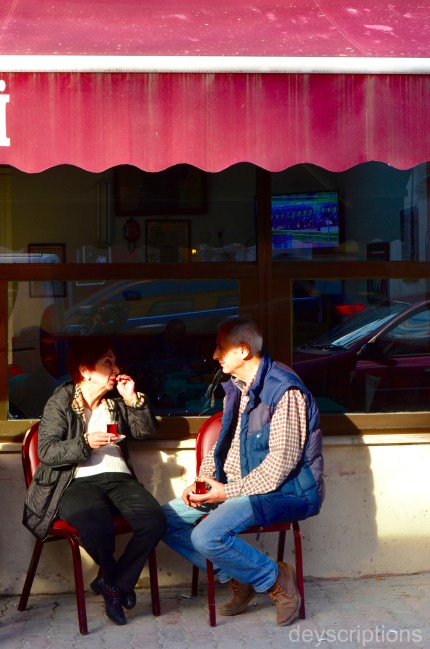 This is the other side of Istanbul, where notwithstanding the death of diversity, the ethos of its social fabric seems to have survived.
At Asude Caviye, where I sat amidst locals, drinking tea, with wisteria blooms dangling over its dark red canopy, I was asked, in broken English, where I came from, what I did for a living, how I found their little village Kuzguncuk and so on. I likened this courtesy to a souvenir – a souvenir from an old culture that lingers on its streets.
POCKET GUIDE
Places to visit:
Beth Ya’akov Synagogue: One of the synagogues that stood the test of time, Beth Yaakov was the meeting point of Kuzguncuk’s active Jewish community. Unlike orthodox Judaist synagogues, the interior walls as well as the dome interiors have been embellished with paintings.
Church of Hagios Panteleimon: A monument of the Byzantine kingdom, this church located on Icadiye Cadessi was built during the reign of Emperor Justinian I, ruler of Constantinople, who had the reputation of rebuilding Hagia Sophia with the dome. The Hagios church included a domed bell tower in the early Nineties, a new and distinct addition to its architecture.
Surp Krikor Lusavoric Armenian Church: The oldest Armenian church in Kuzguncuk, its design includes a dome shaped roof, commonly seen in Armenian churches. The church was restored in the Fifties and made way for a mosque to be built next to it, in 1952. By the time the mosque was built, most Armenians had left Istanbul. The church and the mosque stand shoulder to shoulder – the former a relic of the past, the latter a symbol of the present.
Where to eat:
Ismet Baba: Seafood meyhane with old-school charm, located in the square by the waterfront. Serves raki, the local anise-flavoured drink.
Kuzguncuk Balikcisi: Another option for traditional Turkish seafood.
Kozinitza: This cafe bears the historical name of Kuzguncuk, previously known as Kosinitza: Also good for seafood, European style.
Cinaralti Cafe: For tea and a quick bite.
Betty Blue Cafe: For tea and breakfast amidst their eclectic decor.
Nail Kitabevi & Cafe: Book lovers should not miss this two-storied bookstore cum coffee bar housed in a heritage building. The bay window with cushioned seating, surrounded by stacks of books is a good place to read while enjoying a view of Icadiye Cadessi. Look out for their ornate entrance.
Kuzguncuk is best for:
Walks. Photography. Tasting local treats.
Wordbook
Cadessi: Street. Mahale: Neighbourhood (Mohalla in Hindi). Yali: Waterfront mansions. Cay: Tea, pronounced chaay. Meyhane: Tavern or traditional restaurant. Literal translation – house of wine. During the Ottoman era, Istanbul’s meyhanes were owned by its minority communities.
Images are subject to copyright. Cover image courtesy: Wikimedia Commons.
Copyright of [Sharmi Dey] and [Deyscriptions], 2017. Unauthorized use and/or duplication of this material without express and written permission from this site’s author and/or owner is strictly prohibited. Excerpts and links may be used, provided that full and clear credit is given to [Sharmi Dey] and [Deyscriptions] with appropriate and specific direction to the original content.
 Deyscriptions