DESIGN
The past and present commingle through design in Abode Bombay, the city’s first boutique hotel by the sea.
We love all things vintage, as this era carries with it not just vignettes of a time gone by, but also historical legacy and stories to regale future generations with. While we were in search of our vintage fix recently, wandering around Mutton Street, a lane famous for antiques in Chor Bazaar, I decided to head over to Abode Bombay and have a cup of tea in its eclectic cafe. A boutique hotel reputed for having contextualised its design to the culture of Bombay-Mumbai, and for being the city’s only hotel to serve you an all-encompassing local experience, we also know Abode to be a haven of antiques and rare vintage furniture finds from bazaars across the country.
Abode is nestled in Lansdowne House in Colaba, the erstwhile private residence of David Sassoon, Bombay’s most successful businessman. The Shams, a local family commercially engaged in antiques, acquired the property in 1982 and operated it as Regency Inn. In 2014, swayed by a wave of resurgence, the family decided to redefine the inn. The concept, design, and thoughtfully planned decor of its new avatar, Abode, set the narrative for the Bombay story — both past and present. The hotel has since then brought boutique chic to Colaba, a neighbourhood in South Mumbai known for being a repository of heritage, whose inhabitants strive to preserve the city’s colonial past, and fight fiercely against any form of gentrification.
To the discerning traveler, Abode helps them begin their discovery of Bombay of the past, and Mumbai of the present. A five-minute walk from the hotel takes you to the Gateway of India and the city’s famous Taj Mahal Palace hotel. Even given its proximity to these historical behemoths, Abode holds its own, having created a niche with its boutique travel offerings. The hotel’s unique selling points lie in its design and ambience, emphasis on local food, and tailor-made local tours that introduce travellers to several pockets of the city, including Sassoon Dock and the life of its fishermen community.
The frame of reference for the design was ‘Bombay’ – the way it was. The trifecta of the city’s history, architecture, and culture layered with impressions of life within its communities inspired proprietor Abedin Sham and interior designer and founder of Young Citizens, Sian Pascale to collaborate and shape the design journey for Abode. Each important aspect of the Bombay persona — the legacy left behind by the British, residuals of its Art Deco past, its cultural identity and life of its native inhabitants — found its way into the design of every space within the hotel.
The design team took a conscious decision to retain and celebrate certain structural aspects of the building, such as the exposed iron beams inside the rooms. The stairwells introduce you to a colourscape characteristic of the city, through handmade floor tiles patterned with traditional motifs. The pattern also continues the visual narrative that stems from the hotel’s logo — an interpretation of Rangoli. The lobby on the first floor is designed to look like a cafe, where guests can gather after a day well-spent sightseeing around Mumbai. The look was carefully created to feel restorative. Every piece of furniture has been recycled, and shines against the reclaimed teak wood pillars, while the 19th century original chandelier from the building is a proud highlight.
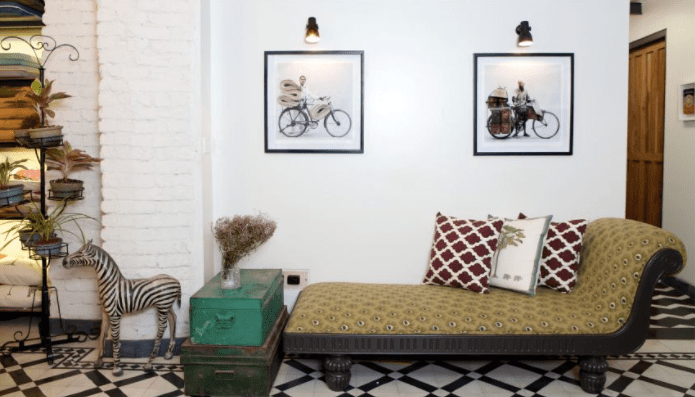
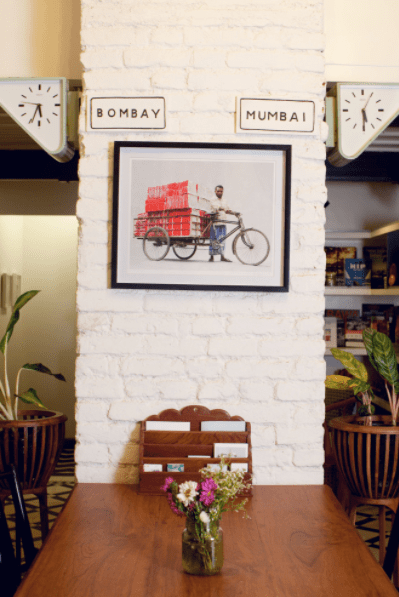
The decor is quintessentially ‘Bombay’ while also being eclectic with a vintage touch. An antique camphor chest, art deco sofas, furniture and decor inspired by street food, and recycled Irani chairs are some of the highlights. On the wall is ‘Men in Cycles,’ street-art photography, which was a gift from photographer Anja Bohnhof, one of the first few guests to have stayed at Abode. The indigo blue kettle on display at the cafe looks like it could have been part of a country home in the Alps! Originally from Amsterdam, it was sourced from Chor Bazaar; the blue enamel teapot that sits next to it and invites occupants to gather for tea is also a Chor Bazaar find. Another vintage treasure that catches your eye, a framed piece of the map of India which includes Pakistan, was sourced by proprietor and antique collector Eassa Sham from a flea market in San Francisco. Says Sham, “This map is a rare collector’s piece, and one of my favourite antique items in the hotel. I have turned down several requests from visitors ready to pay any price to own it.”
 The rooms at Abode, and the vintage furniture within each, are not identical yet maintain a uniformity in style and character; each piece of furniture was brought together to articulate an eclectic decor story centred around the Bombay theme. The cast iron bath tubs in the rooms that were sourced from an antique flea market in Hyderabad make you time-travel to Bombay’s colonial past, while the hardwood Art Deco sofas pay homage to the city’s Art Deco heritage. The patterned flooring — both in black and white, as well as in pops of blue and yellow — was thoughtfully chosen as a reference to the city’s colonial identity. Pascale was charmed by the city’s street food culture and drew on her inspiration to create the Bhelpuri night stand, made of recycled Burma teak wood. She also enlisted the help of truck painters in the city to give a local twist to the door signage. Old black and white pictures of Parsi couples were added for a retro touch, and to introduce visitors to the Parsis of Bombay.


From left to right: 1. The Bhelpuri night stand, made of recycled Burma teak wood. Picture Courtesy. 2. Black and white iron cords were used to create a series of Bhelpuri wall lights for the hotel. Picture Courtesy.
The carefully thought-out decor details at Abode Bombay urges visitors to learn more about the Maximum City. It is a microcosm of the boutique travel experience in Mumbai with slices of local culture, heritage, luxury and exclusivity, interspersed in equal parts. As Abedin Sham rightly put it, “The idea for Abode stemmed from our desire to create a space that offered a unique, every day Bombay-Mumbai experience, far different from what glitzy five-stars in the city offer, and to inspire everyone who visits to know more about it.”
Vintage Hallmarks at Abode


From top left to right: 1. The restored Art Deco Sofa is a high point in Abode’s eclectic decor theme. Set on a patterned floor of black and white handmade tiles, it encapsulates the colonial, vintage look. 2. The Irani chairs surrounding the centre table in the lobby were sourced from Chor Bazaar, and were restored with a natural lacquer finish. They impart an informal cafe-like atmosphere to the lobby. 3. The aromatic Camphor Chest in Room 105 that doubles up as a table was sourced from Jew Town in Fort Kochi. It is Eassa Sham’s favourite find for Abode. 4. The white cast iron bath tubs were sourced by Eassa Sham during a visit to Hyderabad. Remnants of the Victorian era, they celebrate Abode’s connections to a colonial past.
Eassa Sham’s eclectic collection of decor and chotchkies spurred me to put together this list of bazaars for everyone who loves to travel and scout local markets for shopping. If you are a fan of antique decor for your home, here are five recommendations for antique bazaars across India:
SHOPPING GUIDE
Jew Town, Mattancherry
A visit to Cochin’s Jew Town is a must for everyone who loves antiques. A shopping street in Mattancherry, it is famous for its vintage, atmospheric charm. The street is lined with Portuguese-style houses that function as curio shops selling antiques and spices. Items you are sure to find include wooden furniture, carved wooden statues and boxes, bronze vessels, and glass and ceramic artefacts from around the world. Indian Arts and Curios is a well-known dealer selling antiques.
Sunder Nagar Market, Delhi
While Janpath and the Tibetan markets are popular choices in the capital city, we would recommend Sunder Nagar for its laid-back charm and vintage offerings. Art and handicraft collectors will love the galleries selling contemporary art, as well as the bargains they can find for ethnic wooden furniture, local crafts, tribal artefacts, vintage tableware and other decor pieces.
Chor Bazaar, Mumbai
Originally known as Shor Bazaar (a noisy market), this market became famous as Chor Bazaar due to its reputation of stocking stolen antique finds. From furniture and lamps to beautiful china, paintings and wall art, gramophones and old clocks to parts of vehicles that you can recycle and reuse, there is nothing a collector would want and not find in Chor Bazaar!
Oshiwara Market, Mumbai
Another place in Mumbai where you can find beautiful antiques for a steal is Oshiwara antique market in the Western suburbs. From old trunks and chests to china, vintage artwork and heritage furniture, the market is packed with treasures waiting to find a new home.
Sunday Bazaar, Charminar, Hyderabad
If you happen to be near Charminar on a Sunday, you may as well visit the weekly flea market for a dose of touristy pleasure. Collectors are sure to stumble upon restored decorative antique finds in this bazaar, that you can take home as souvenirs.
This post first appeared on the Discern Living Design Blog.
All images, barring those with sources mentioned, have been shot by Sharmi Dey.
Copyright of [Sharmi Dey] and [Deyscriptions], 2016. Unauthorized use and/or duplication of this material without express and written permission from this site’s author and/or owner is strictly prohibited. Excerpts and links may be used, provided that full and clear credit is given to [Sharmi Dey] and [Deyscriptions] with appropriate and specific direction to the original content.
 Deyscriptions